Landing Page vs Website: Which Should You Use?
.avif)
.png)
.png)

.png)
.png)
.svg)
Landing Page vs Website: Which Should You Use?
Where should I direct my customers for a limited-time sale?
How would prospective users trust my brand?
Do I need a website or a landing page to communicate my brand ideology?
If any of these questions have crossed your mind, you’re in the right place. Landing Page vs Website, which one should you choose? Scroll on as we guide you to make the right choice.
What is a Landing Page?
A landing page is a standalone conversion-focussed web page made for a very specific purpose.
You design a landing page with one sole objective.
Guide users to the exact details or the final step to what you’re trying to obtain from your advertisement. (Sign ups, Bookings, Sales, etc.)
The visitors land on your landing page (pun intended) to get right to the point. They do so after clicking one of your ads, a link sent in your email campaign or a social media post.
The sole purpose of a landing page?
All aligned with your specific marketing campaign. Your objective is shown via your CTA (call-to-action).
Unlike a website or a homepage, a landing page owns one singular piece of communication and blocks out all the extra unnecessary matter.
Every landing page follows one singular goal (like signups to newsletters, purchases, form fills, bookings, etc.)
In short, landing pages are typically used for very directed lead capturing, all aligned with one singular objective rather than broad browsing.
For instance, if your user saw an ad of one of your marketing campaigns around a defined festive sale. Your landing page will redirect them to this specific catalogue, and stray away from any other distracting elements.
In totality, a landing page is:
- Campaign-specific
- Action-driven
- Offers an exchange of value. Email address in exchange for an e-book or a whitepaper. Clearance sale during a limited-time.
- Friction-free. Guides users seamlessly to the next step.
What is a Website?
A website is a collection of multiple webpages. These webpages are different categories of your brand, ranging from About Us, The Brand, The Team, your product catalogue (if you’re an e-commerce brand), your services and portfolio if you’re an agency or a freelancer.
In short, your website is that space on the internet that offers the A-Z of what your brand stands for and all that it offers. All of this comes under a domain name and is hosted on a web server.
In fact, a website serves multiple purposes:
- Complete brand discovery
- Great for SEO purposes. All the content that’s published on your website is linked to your overall SEO.
- Broad level browsing where your audience gets to explore your brand.
A website, unlike a landing page is made up of multiple goals. Users can hop to different categories as per their intent and need. This means broader navigation, multiple menus and internal pages and multi-intent visitor behavior.
That’s why the best website experts make sure to offer something for every user type, across all top and bottom funnels. Know more about funnels and how to create one that converts here.
Landing Page vs Website: Key Differences
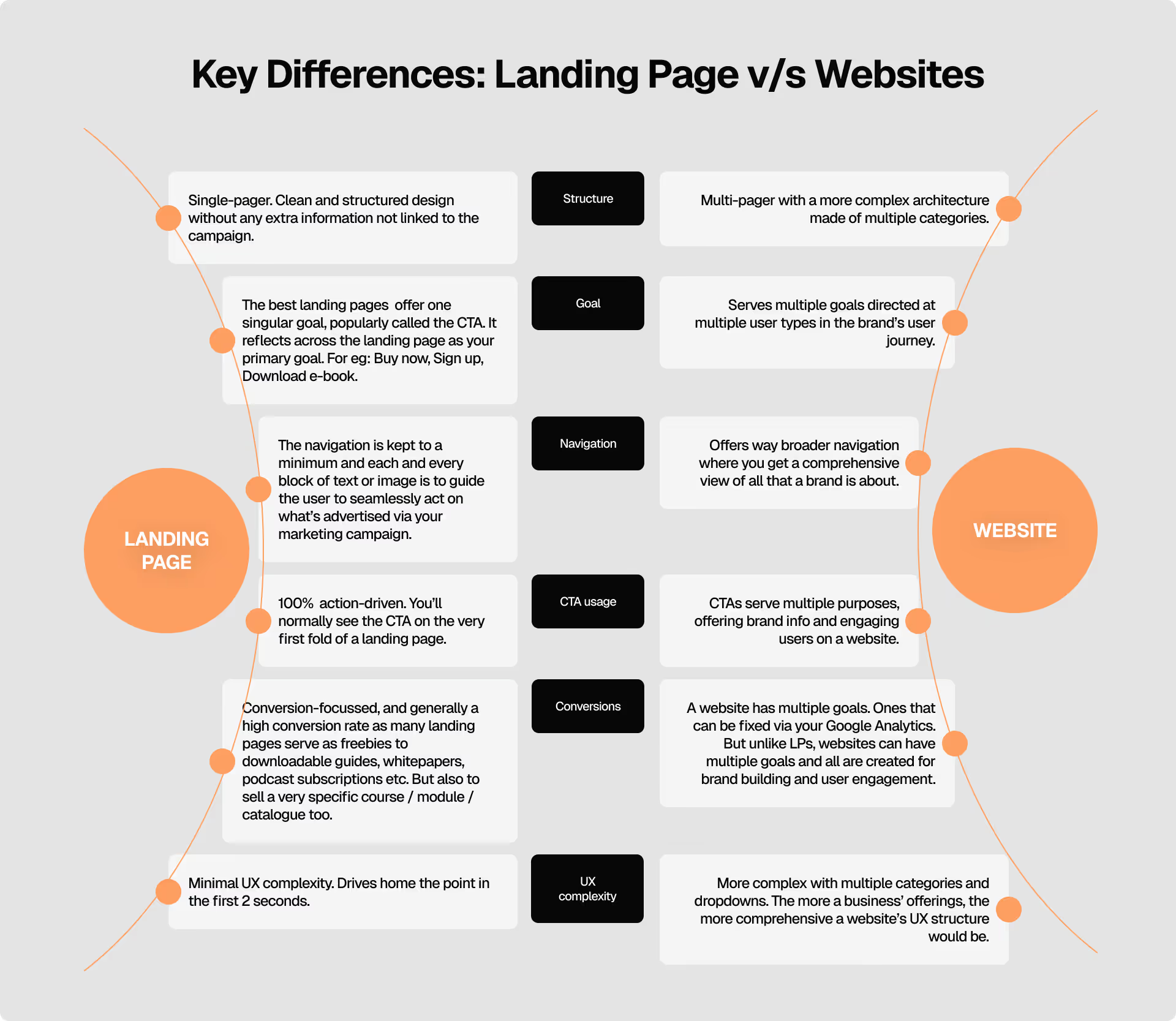
LANDING PAGE
Focussed on a single goal
Minimal navigation
CTA-driven design
Tight funnel audience flow
Limited SEO ranking scope
WEBSITE
Focussed on offering broad and comprehensive information
Full menu system
Multi-path browsing
Open exploration across all audience funnels
Multi-keyword strategy with a high SEO ranking scope
Looking for inspiration? Check out the 15 best SaaS website designs of 2026.
Landing Page or Website - Which Should You Choose?
Your choice depends on your goals, budget, timeline, and traffic sources. However, if your long-term objective is brand building, it makes sense to invest in tools that allow you to create and manage both landing pages and a full website.
Check out this article on how to choose the right platform for building your website.
FAQs
What’s the primary difference between a landing page and a website?
A landing page is a single page focused on one clear visitor goal, while a website is a multi-page information hub built for content, context, and long-term brand building.
Which converts better, a landing page or a website?
A landing page typically converts better because its primary traffic sources are ads, email campaigns, and social media. The messaging across these channels is clearly reflected on the landing page, guiding users directly to the CTA without loops or leaks in their journey
Can I use a landing page without a website?
Absolutely. You can create landing pages even if you don’t have a running website. There are many tools like Unbounce, Hubspot, Leadpages and more that help you create effective landing pages.
Which is better for SEO, a website or a landing page?
A website is better for SEO. Landing pages are temporary and campaign-led. Once a campaign ends, the landing page often loses its purpose. A website, on the other hand, is where you build and manage your long-term presence, including SEO. It strengthens organic visibility and trust over time.
How many landing pages can a business have?
There is no upper limit to how many landing pages a business can have. The focus should instead be on having high-performing, action-driven landing pages that drive conversions and lead captures. For instance, each campaign, product, audience segment can have its own dedicated page. This ensures a message match, higher relevance and conversions.



_%20Profitable%20%26%20Micro%20SaaS%20Ideas.png)
.svg)

